Is the church dying?

Almost weekly I read articles on the dying church. Now, I will concede that mainline churches are in decline and have been for decades, but I believe the church of Jesus Christ is far greater than that and is doing quite well.

John Leith writes that “much of the crisis in the church today is aggravated by the refusal of many people…to take theological issues seriously, to understand that the great human problem is not social, political, economic, psychological, or physical but theological.”

I believe passionately in social action and justice efforts, but these are not ends in themselves. I think that our social action should flow from our being loved by God and our corresponding love for Him. It is the good news of the Kingdom of God, the gospel, that should grip our souls and cause us to seek justice, love mercy and walk humbly with our God.

If Jesus Christ is who we say he is, the Word become flesh, then “no other event in human history can comp;are with his birth, life, death, and resurrection…It is the greatest good news that ever came to human beings on this planet. No other work can possibly compare with the significance of proclaiming this gospel to all people everywhere.” (Leith)

Chosen in Christ…

I don’t know of any doctrine in Scripture as misunderstood as the doctrine of our divine election as children of God. Calvin is always associated with election and predestination, but his views are usually misrepresented. For Calvin, the doctrine of election was a source of great comfort. While this blessed truth has many facets which are difficult, if not impossible, to understand, there is sweet comfort in the truth that we are loved by God as His dear children out of the wonder of His sheer grace.

Our sin has left us unable to choose Christ – but God, who is rich in mercy graciously grants the gifts of faith and repentance and we, in turn, run to Christ. Calvin writes: “But if we have been chosen in him, we shall not find assurance of our election in ourselves; and not even in God the Father, if we conceive him as severed from his SOn. Christ, then, is the mirror wherein we must, and without self-deception may, contemplate our own election.”

We need have no sleepless nights wondering if we are God’s children. Our election or salvation “has a human face; the face of Jesus…What comfort!” (Don McKim)

Rejoice today, that by grace we are able to say: “I am my beloved’s and my beloved is mine!”

The Kingdom of Heaven is like….

One thing I know – the kingdom of God is unlike any earthly kingdom we can compare it with. God’s kingdom is a kingdom of love, grace, mercy, holiness and justice.

In my E100 readings today I read about the kingdom of heaven in Matt. 13. In the parable of the sower and the seeds I was reminded that this journey of faith is not a sprint – it is a marathon. What a great parable to remind us of that precious truth of the perseverance of the saints.

That doctrine is different than once saved always saved. The perseverance of the saints teaches that all God’s children will persevere to the end in righteousness and holiness. We persevere to the end because God grants the gift of faith to begin the journey and sustains that faith by His grace all along that journey.

Let’s establish beachheads today where the kingdom of God can break into our world! Let’s do that again tomorrow – each day plodding along and doing the next right thing!

All things made right…

Jesus gave his disciple three promises designed to equip them for ministry: First, the reality that their lives would not be easy; Second, that God would be present with them on the journey and would never forsake them; and third, that all things would be set right by God one day yet to come.

Whatever our eschatology, the common belief of the church through the ages is that in the end God will set all things right. There is a day coming when peace will reign, when the glory of God will fill the earth without the constraints of sin, when there will be no tears – all will be made right.

Whenever we face troubles in life, Calvin maintained that we should be “aroused to meditate upon the future life.” (3.9.1). He would go on to say – “For before their (believers’) eyes will be that day when the Lord will receive his faithful people into the peace of His kingdom, “will wipe away every tear from their eyes, will clothe them with a robe of glory and rejoicing, will feed them with the unspeakable sweetness of his delights, will elevate them to his sublime fellowship, will deign to make them sharers in his happiness.”

We have a glimpse of this here and now – and what a glimpse it is. But this hope of a day in which all will be set right should encourage us to work for that today – to endeavor to set things right now – waiting for the fullness yet to come. So, keep doing the next right thing – knowing your work is never meaningless!

The Glory of God in Creation

Cripple Creek

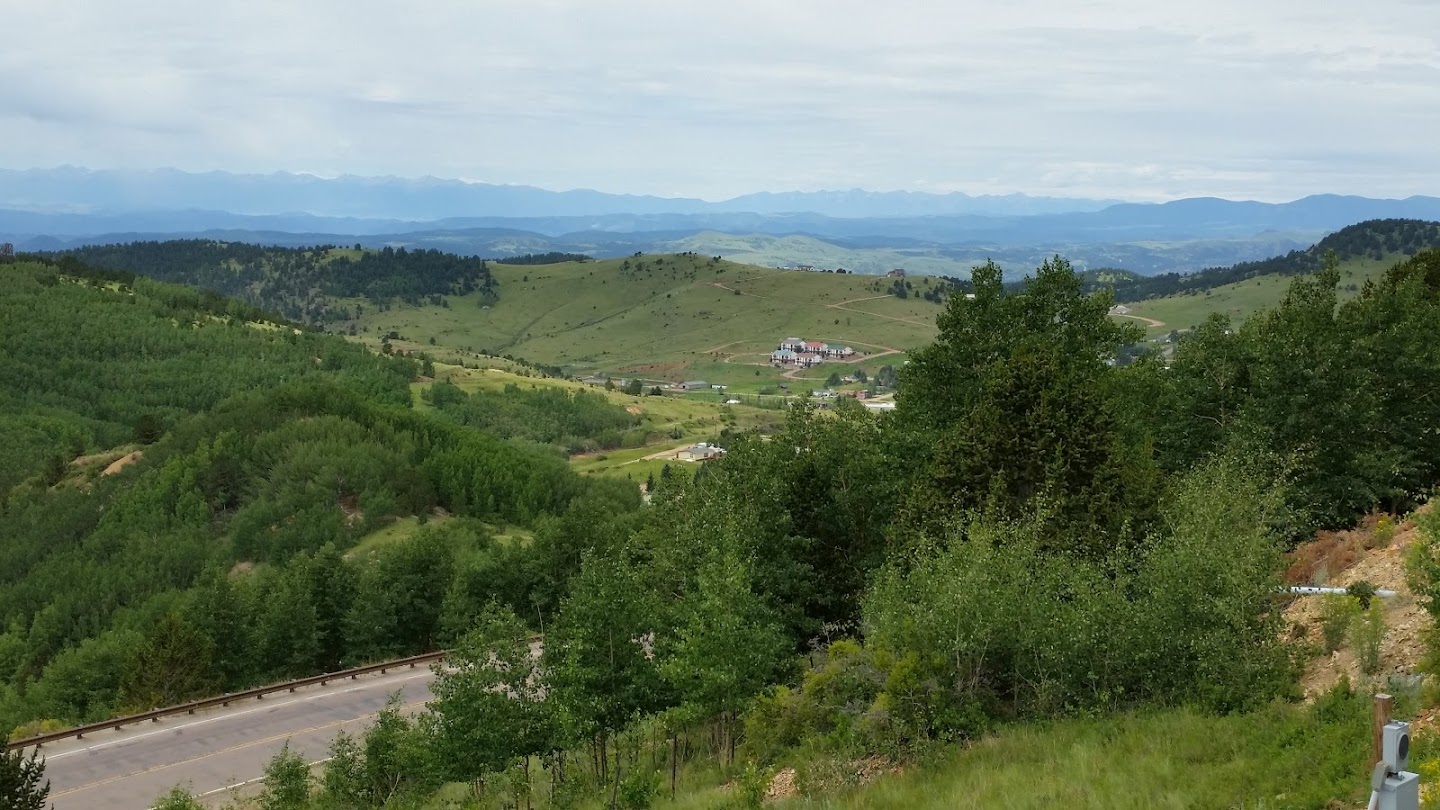
Back from a week riding the motorcycle in Colorado. Many thoughts and impressions. First, 70 degrees is much better than 97! Second, the rain suit came in very handy! Third – the beauty of the mountains speaks deeply to my soul of the glory of God our Creator. Calvin reminds us that God “daily discloses himself in the whole workmanship of the universe.” With humankind as the loftiest proof of divine wisdom Calvin also writes; “infants, while they nurse at their mother’s breasts, have tongues so eloquent to preach his glory that there is no need at all of other orators.”

I am incredibly thankful for a God who chooses to reveal himself in what He has made. But the fullest revelation of God comes in His son Jesus Christ. In the Son we see the what the Father looks like – what the Kingdom of God is all about. Thanks be to God!

The Content of Prayer

Today I want to share a post that is not mine, but comes from the Foundation for Reformed Theology. It meshes with what we have been talking about on Wednesdays about prayer.

“John Calvin teaches that prayer grows out of faith and that prayer consists of asking God for what God has already promised us and given us in Christ:

“It remains for us to seek in Him and, by prayers, ask from Him what we have learned is there.”

John Calvin, Institutes of the Christian Religion: 1541 French Edition, translated by Elsie Anne McKee (Grand Rapids, Michigan: Eerdmans, 2009), p. 458.

“What we have learned is there” refers to all that Christ has given us in the wonderful exchange of his blessing for our curse. That is to say, everything that we know we have in Christ, we are to ask for from Christ. That is what prayer is. Just as faith is not “believing what we know ain’t so,” but is instead precisely a special kind of knowledge, so also is prayer not a blind grasping but a knowledgeable beseeching.

Or again, we do not pray in the hope of making God merciful. Instead, we pray only because we already know that God is merciful. That makes all the difference in the world.

“It is by the benefit of prayer that we have an entrance into the riches we have in God. . . . God does not tell us anything which we are to hope from Him, without likewise commanding us to ask for it in prayer. . . . By prayer we seek and find the treasures which our faith is shown in the gospel.” (p. 459)

Again, it is not the purpose of prayer to convince God to give to us what he is otherwise unwilling to give to us. Instead, it is the purpose of prayer to open ourselves to the gifts of God which he has already promised us.”

Foundation for Reformed Theology

Worship

I read constantly about those who are spiritual, but not religious. On the one hand, I understand where they are coming from. Dead formalism – worship that merely goes through the motions – is offensive at every level. But, we must be careful to not throw out the baby with the bath water.

The worship of God is a main response of God’s people throughout the Scriptures. It is embedded in the 10 commandments as a reflection of the very heart and nature of God. We must avoid dead formalism; we must not fail to unite heart and mind; but we must not fail to worship the living God in the beauty of His holiness.

Calvin maintained that “believers have no greater help than public worship, for by it God raises his own folk upward step by step.” (Institutes 4.1.5). Worship is not an option. It is an absolute necessity. It is foundational to our lives in the church. Through worship we offer praise and thanks to God who by the Spirit raises is up, step by step.

We worship every day of our lives as children of God. Our corporate worship should be a gathering of our individual worship throughout the week. If you want corporate worship to be alive, worship throughout the week with a vibrant, fresh worship. If you want to worship like that every day, then do not neglect corporate worship where we are lifted up by the Spirit, step by step. Let us worship God!

Calvin on the Sovereignty of God

I read this morning, out of The Institutes of Christian Religion, Calvin’s thoughts on the Sovereignty of God. While I will never fully reconcile the truth of God’s sovereignty with the opposing tension of our human responsibility, I find the blessed truth of God’s kind hand of providence of immense comfort in this journey of faith.

Calvin maintains that our knowledge of God must not be rooted in intellectual pursuits, but we should contemplate Him in His works and let our hearts be lifted in worship and praise. Augustine teaches “disheartened by His greatness, we cannot grasp Him, we ought to gaze upon his works, that we may be restored to goodness.”

Calvin says – “Knowledge of this sort, then, ought not only to arouse us to the worship of God but also to awaken and encourage us to the hope of the future life.”

So today, take a breath. Look around and see the beauty of the Lord in the wonder of His works. May we enjoy God today and see beauty in this dark world.

IMG_0062

Starting again!

I am starting to blog again, but am taking a more relaxed approach this time. I do not feel constrained to write everyday or even weekly. I will use this to post longer reflections that Twitter allows and see where all this take us. Come along for the journey as we reflect together on theology, Jesus, and what it means to be a child of the Kingdom in this modern culture.